Golden Guernsey
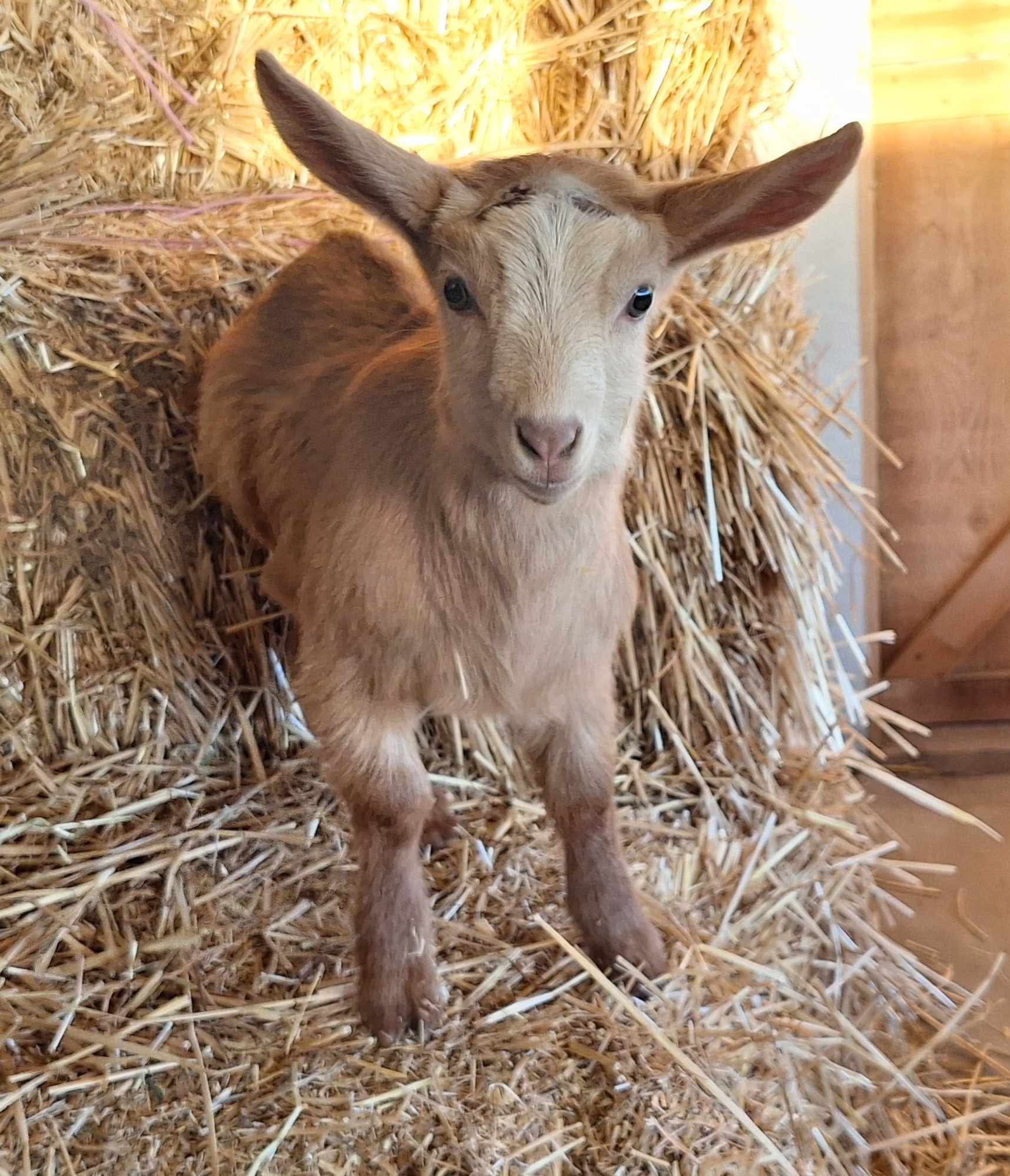
Golden Guernseys are small, fine boned, with a slender neck lacking wattles. British and American Guernseys are frequently larger and heavier boned.
Breed Standards
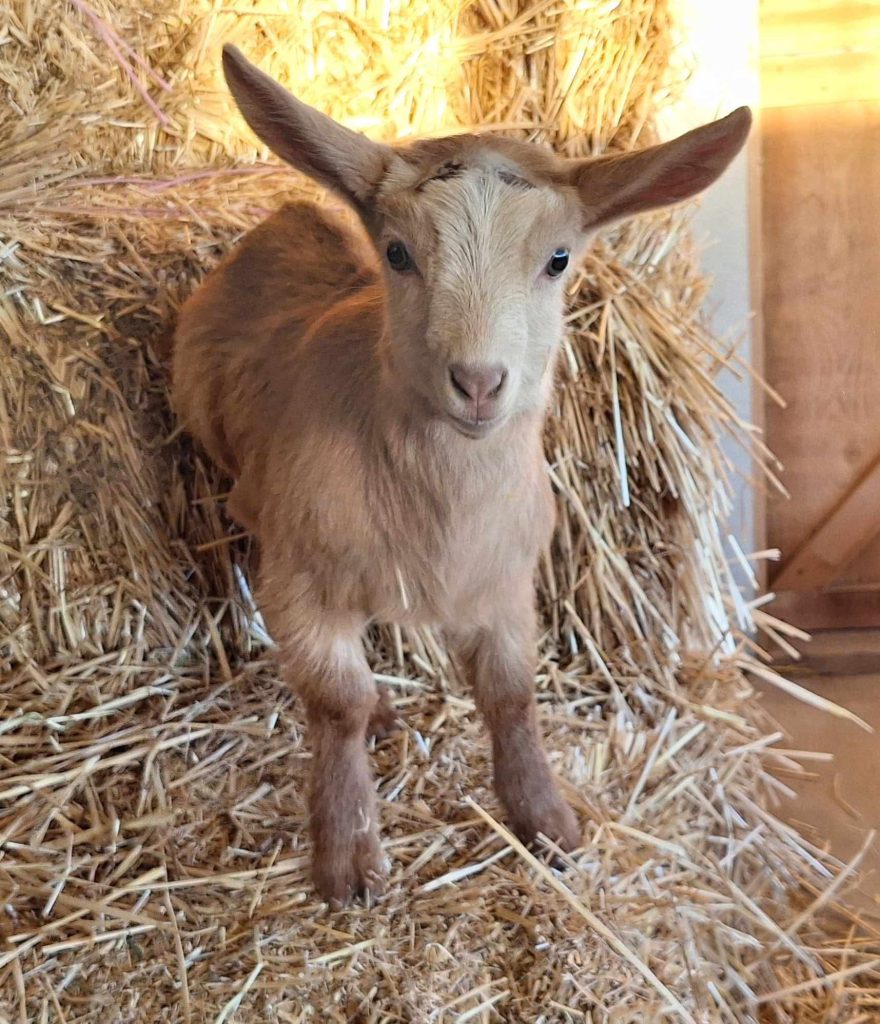
- APPEARANCE: The ears are erect and often set slightly lower than Swiss breeds and carried horizontally, or forward in what is termed the “bonnet” position when viewed in profile. Ear tips can be slightly upturned. The ears must not be pendulous. The nose should be either straight or dished. Hair may be short or long and flowing or a combination of both. A long curtain, skirt, and/or dorsal fringe of body hair are desirable, although not required to meet standard.
- COLORING: The Guernsey is a golden color, in all shades ranging from very pale flaxen cream to deep russet or bronze. Full or partial roaning; white face; star/blaze are acceptable. White patches are acceptable only for ADGA. The golden body color should be dominant, with no preference shown to any shade or pattern. Crossbred offspring readily inherit the golden coat color, and not all golden goats are necessarily Guernsey. The Guernsey gold color is extremely dominant. It is related to the Saanen white, but when breeding a Saanen to a Guernsey the offspring are almost invariably gold. Skin color must display a gold tone, ranging from peachy- flesh to orange-gold in one or more of these places; muzzle, ears, eyes, under tail, mammary or scrotum. Swiss facial stripes and/or rump marking; black markings or spots over 1-1/2 inches are not allowed.
- SIZE: The Guernsey is overall medium in size, and the smallest of the standard sized dairy goat breeds. Females are a minimum 26”/120 lbs, and males are a minimum 28”/150 lbs.
Personality
The Guernsey character is docile and gracious, and they are ideal for homesteading, cottage industry dairy production, and 4-H. They are a wonderful way to introduce youth to livestock, and will quickly endear themselves to the whole family.
Production
The Guernsey is an efficient producer of high quality milk for its size, making the breed desirable in a commercial or homestead dairy.
Udders are continuously being improved with breeding up.
Although milk yield is less than other dairy goats, food intake is lower and conversion rate high, so they are an economical breed. The milk yields larger cheese weight per volume than average, and known to be exceptionally sweet and creamy. Milking trials in England with 272 individuals (mostly Golden Guernsey) recorded an average 24-hour yield of 3.16 kg at 3.72% butterfat and 2.81% protein.